
FISH —— Pathology, fluorescence in situ hybridization
What is a FISH?
Fluorescence in situ hybridization (FISH) is a cytogenetic technique that can be used to detect and target nucleic acids. Fluorescent labeled nucleic acid probes are only heterozygotic with highly similar nucleic acids, which can be used to locate genes on chromosomes. It is a molecular cytogenetic diagnostic technique widely used in clinicopathological detection.
√ Fluorescence: Using fluorescein to label specific DNA fragments (probes)
√ In situ: The original location of the target to be determined is usually the DNA in the nucleus
√ Hybridization: The probe binds specifically to the target DNA or to the RNA
Original reason
Using the principle of hybridization, the probe DNA was labeled with fluorescent dye and hybridized with the specific target DNA sequence of the chromosome or nucleus after degeneration into a single strand. The deletion, amplification and translocation of the sequence to be sequenced were determined by observing the position, size and quantity of the fluorescence signal with a fluorescence microscope.
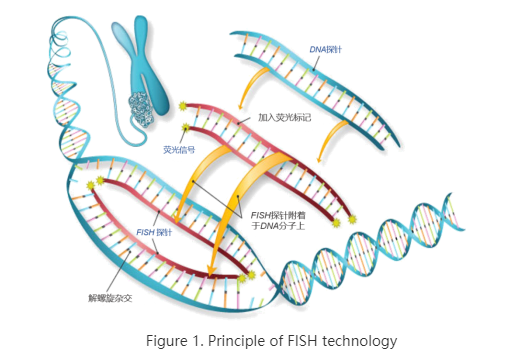
In vitro diagnosis, H&E staining can reveal the basic structure of cells. Immunohistochemistry (IHC) can reveal the distribution of a particular molecule in a tissue; FISH can further reveal more microscopic changes, such as pathogens, chromosome abnormalities, and so on.
A surname
Fluorescent in situ hybridization (FISH) is a new non-radioactive molecular biology and cytogenetics technique developed on the basis of radioactive in situ hybridization in the late 1980s. It is a new in situ hybridization method formed by replacing isotope labeling with fluorescent labeling.
In situ hybridization (ISH), originally developed by Joseph Gall and Mary Lou Pardue in 1969, uses a radioactive probe to determine the chromosomal location of hybridized nucleic acids. Soon after, fluorescent probes quickly replaced radioactive probes based on their higher safety, stability and easy detection, and began to enter a rapid development stage from the 1980s.
For use
FISH technology is widely used in:
1. Application in the construction of DNA molecular physical map
FISH technique can quickly and precisely determine the position of probe on chromosome after hybridization. Different modified nucleotide molecules can be used to label different DNA probes, and different fluorescein molecules can detect different levels of probe molecules. Therefore, fluorescence microscopy can simultaneously observe the location of several DNA probes on the same slice, and obtain the relevant position and order.
2. Application in gene mapping
The study of the distribution of coding genes in the human genome by FISH technology revealed that the genes were mainly concentrated in the most abundant G+C(35% of the whole genome) DNA segment on the chromosome. FISH technology also provides an important means to observe chromosome telomere structure and centromere structure.
3. Detection of gene amplification and deletion
FISH analysis indicated that the cell rupture may be due to the structural rearrangement of chromosomes containing amplified regions. At the same time, the location and copy number of foreign genes in transgenic plants could be mapped, and some gene deletions associated with inherited diseases could also be detected.
4. Chromosome number and structure abnormalities, applied in rapid prenatal diagnosis
In 2000, the American College of Medical Genetics (ACMG) announced that FISH technology can be used to identify common chromosome number abnormalities. Especially in prenatal diagnosis of Down's chromosome 21 mutation.
5. Application of solid tumors
FISH technique can quickly detect chromosome abnormalities in any type of tissue cells, whether fresh tissue or formaldehyde-fixed tissue specimens. Taking bladder cancer detection as an example, Yuding's Blang Easy Check ™ -Bladder Cancer cell chromosome and Gene Abnormality detection kit mainly detects aneuploidy on chromosomes 3, 7 and 17 and deletion of chromosome 9p21(p16 gene) in urine shed cells to determine whether there is cancer. The technique is also currently recognized as a way to detect bladder cancer or recurrence earlier than cystoscopy.
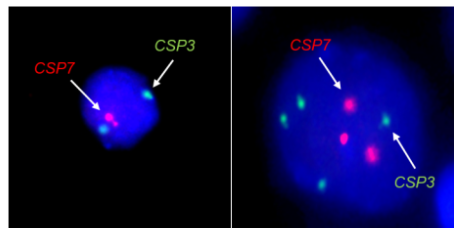
Figure 2. Results of clinical samples of ™
Show one's hope
Now,FISHThe technology has been widely used in cytogenetics, tumor biology, gene mapping, gene amplification, prenatal diagnosis and mammalian chromosome evolution. With the development of molecular biology,New probes are popping up all the time,FISHThe development and application of technology will accelerate and deepen human understanding in many fields.
References
[1]Ma Lizhen.Fluorescence in situ hybridization and its application[J].Journal of Qinghai University(Natural science edition), 2001 (01) : 18 to 21, DOI: 10.13901 / j.carol carroll nki QHWXXBZK. 2001.01.006.
[2]Chen Chengzhong,Yu Hongqin.Fluorescence in situ hybridization and its application[J].Biology teaching, 2007 (01) : 2-4.
[3]mackerel,Chen Lijun,Qu Nan,Zhao Li,Wang Yalin,Huang Chen,Wu Jiayan,Chen Biao,Li Xuechao,Li Jiantao.Role of fluorescence in situ hybridization in early diagnosis of bladder cancer[J].PLA medical journal, 2012, 5 (6) : 589-591.