Beware of the silent killer ---- Prostate cancer
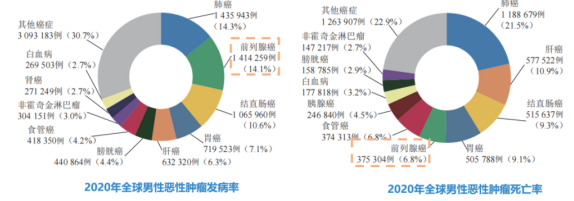
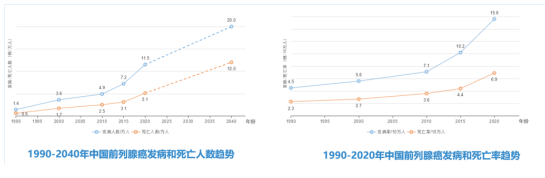
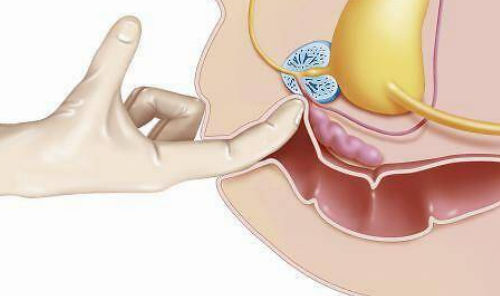
What is prostate and prostate cancer? Located below the bladder and in front of the rectum, the prostate is a gland the size of a walnut. Prostate secretions are the main component of semen, and their secretions protect, support and help transport sperm. As men grow older, the prostate expands over time, which can further lead to benign prostatic hyperplasia (BPH), but there is no clear evidence that BPH can lead to prostate cancer. Figure 1 Prostate and prostate cancer Cancer begins when healthy cells in the prostate gland change and get out of control. Mutations in the DNA of abnormal cells cause the cells to grow and divide faster. Abnormal cells continue to live when other cells die; The accumulated abnormal cells form tumors that can grow and invade nearby tissues. Some abnormal cells also shed and spread to other parts of the body. Prostate cancer is unusual compared to other types of cancer in that many prostate tumors do not spread quickly to other parts of the body, and some prostate cancers grow very slowly and may not cause symptoms or problems for years or ever. Even if prostate cancer has spread to other parts of the body, it can be managed for a long time. In fact, many men don't even know they have the disease. The incidence and death status of prostate cancer in China According to the 2020 World Cancer Report released by the World Health Organization's Agency for Cancer Research (IARC), there are expected to be 19.29 million new cancer cases globally in 2020, with a crude incidence of 247.5 per 100,000, an estimated death rate of 9.96 million, and a crude mortality rate of 127.8 per 100,000. In 2020, China is expected to have 4.57 million new cancer cases and 3 million deaths, accounting for 30% of the global total. In 2020, prostate cancer ranks second in the global incidence of male malignancies (1.414 million cases) and fifth in the mortality rate (375,000 cases). Figure 2 Global incidence and mortality of male malignant tumors in 2020 With the continuous growth of China's average life expectancy, the change of diet structure and the improvement of diagnostic technology, the incidence and mortality have shown a rapid growth trend in recent years, especially in terms of mortality, some data pointed out that prostate cancer has become the fastest growing male malignant tumor in China in the past decade, China's prostate cancer prevention and control situation is not optimistic. Figure 3 The incidence and mortality rate of prostate cancer in China are increasing year by year Risk factors for prostate cancer According to current research, there are many causes of prostate cancer, and the occurrence of prostate cancer may be the result of comprehensive effects. 01 age The biggest risk factor for prostate cancer is aging. Prostate cancer usually develops after age 50 and is most common in men over age 70. Only 4.3% of prostate cancer cases were diagnosed before the age of 55, 24.6% were diagnosed between the ages of 55 and 64, and 71.1% were diagnosed over the age of 64. 02 Genetic predisposition A small percentage of prostate cancers are caused by genetic predisposition. Patients with germ cell mutations in their DNA repair genes are most likely to develop prostate cancer, regardless of whether they have a family history of prostate cancer. These mutations are embedded in the genes and can therefore be passed on to children. 4.6 percent of men with localized prostate cancer had these genetic mutations, while 11.8 percent of men with metastatic prostate cancer had mutations. Localized prostate cancer refers to cancer that is confined to the prostate gland, while metastatic prostate cancer refers to cancer that has spread beyond the prostate gland. Patients with a positive family history of prostate cancer are more likely to have cancer. Having a first-degree relative (such as a father or brother) with prostate cancer increases a man's risk of developing prostate cancer in the future. 03 Other factors In terms of diet, the causes of prostate cancer are high fat diet and obesity factors. Consuming high amounts of saturated fatty acids is thought to increase the risk of prostate cancer. On the life side, long-term smoking and excessive alcohol consumption may increase the risk of prostate cancer. In terms of environmental pollution, chemical substances such as cadmium and benzene have carcinogenic effects, and special types of work also contain the substance. In addition, clinical trials have shown that many prostate cancer cells find male hormone receptors on the surface, but without male hormone stimulation, male prostate cancer cells will atrophy and degenerate. clinical picture Early prostate cancer is usually asymptomatic. It is often found in a routine health check that the PSA level is elevated, and it is not found until further investigation. However, sometimes prostate cancer can also cause symptoms, and the symptoms of benign prostatic hyperplasia are very similar, including frequent urination, nocturnal urination, dysuria, small urine flow, hematuria, and painful urination. Prostate cancer can also cause sexual dysfunction, such as difficulty erecting and painful ejaculation. More severe forms of prostate cancer can cause symptoms if they invade other parts of the body. Bone pain is the most common, most often in the spine, pelvis or ribs, as long as cancer cells metastasize can be painful. Bones that bear the weight, such as the spine, can be weakened by cancer cells, or fractures can press on spinal nerves, resulting in lower limb weakness or incontinence. Diagnosis and treatment status At present, the clinical early screening methods for prostate cancer include the following: 01 Digital rectal examination The male prostate is located on the pelvic floor in front of the rectum. The size and texture of the prostate can be felt through the digital rectal examination. If the patient has prostate cancer, the doctor can feel the tumor nodules protruding from the prostate surface through the digital rectal examination (middle and late stage). Figure 4 Digital rectal examination 02 Transrectal ultrasound It refers to the insertion of an ultrasound probe through the anus, which can not only observe whether there are abnormal nodules in the prostate, but also determine the volume of the tumor, and evaluate whether the prostate capsule is invaded and metastasized. Therefore, rectal ultrasonography can make up for the deficiency of digital rectal examination and is mainly used to assist in the detection of small cancerous nodules located in the center of the prostate. Therefore, transrectal ultrasonography is an essential means for early diagnosis of prostate cancer. 03 Prostate-specific antigen test Prostate-specific antigen (PSA) is currently the most sensitive prostate cancer tumor marker, although normal people can also detect PSA in the blood, but the content is very low, not more than 4ug/L. If PSA > 10ug/L, the presence of cancer cells in the prostate is highly suspected. 04 Biopsy of prostate gland Prostate puncture biopsy is the gold standard for the diagnosis of prostate cancer. After the patient receives local anesthesia, the doctor performs a puncture through the rectum or perineum under the guidance of B-ultrasound to target the abnormal prostate space. Generally, 12 needle punctures are performed to remove the tissue for pathological examination to confirm whether it is prostate cancer. Figure 5 Puncture approach 05 Pathological examination The pathologist will examine and analyze the prostate tissue after the needle biopsy to confirm whether it is prostate cancer. Gleason is the most widely used prostate cancer grading system to determine the degree of malignancy of prostate cancer cells. The higher the degree of cell differentiation, the lower the score and the better the prognosis. The lower the degree of cell differentiation, the higher the score and the worse the prognosis. Figure 6 Gleason grading 06 Magnetic resonance examination of prostate MRI has good tissue resolution and three-dimensional imaging characteristics, which is currently a good imaging method for the detection of prostate cancer. It can not only clearly show the anatomical structure of prostate, but also describe the functional status of living organs, and has its unique role in the diagnosis, differential diagnosis, staging and detection of prostate cancer after treatment. 07 Radionuclide bone imaging The most common distant metastatic site of prostate cancer is bone metastasis. Radionuclide bone imaging is used to understand whether a patient has bone metastasis, which is an important examination means to determine whether a patient belongs to the early or late stage of prostate cancer and is used for clinical staging. 08 Positron emission computed tomography PET can not directly diagnose prostate cancer, but it can understand whether prostate cancer has lymphatic metastasis, bone or visceral metastasis, and can be used for clinical staging, which has important reference significance for the treatment of prostate cancer. Although there are many methods to diagnose prostate cancer, there is no good marker to be found for early diagnosis, and biopsy puncture also brings many troubles to patients. In order to facilitate the development of clinical research, discover more tumor markers and guide molecular targeted drugs are the main directions of future research. Molecular targeted drugs are the cornerstone of precision medicine, and their high efficiency and safety make them have great potential for clinical application, to find more practical biomarkers, to have a deeper study and grasp of the gene spectrum of disease driver genes, and to have a more macro and global deployment of the whole process of disease management.